As a digital strategist, this is one of the most frequent discussions I have with Polish entrepreneurs. At initial meetings, I usually hear a similar story: the company invests time and resources into social media, publishes regularly three times a week, the posts are graphically correct, and the language is fully professional. Despite these efforts, engagement is limited to a few likes from employees, and business inquiries are simply lacking. For years, the marketing industry convinced us that it was enough to simply "be present and publish regularly" to build an engaged community around the brand. This tactic, which I often call hope marketing, stopped working a good few years ago. Currently, social media platforms are powerful, mature ecosystems whose main goal is to retain the user's attention in order to show them paid advertisements. If your corporate post is not exceptionally engaging, valuable, or highly educational, the algorithm will treat it as a free ad and ruthlessly cut its organic reach.
Why is the old method burning through your budget today?
Treating a profile on Facebook, LinkedIn, or Instagram exclusively as a digital notice board is the fastest way to lose customer attention. Company founders often forget for what purpose users open these apps after a hard day of work. No one goes on social media to voluntarily browse service price lists or read about a given company being an "innovation leader in the industry".
A potential customer searches the web for entertainment, specific knowledge, or a solution to their problem.
If your corporate communication ignores these intentions, you surrender the field to competitors who understand the mechanisms of attention. At Innova Creative, we often audit the profiles of companies that come to us with the problem of a lack of conversions. We usually diagnose several recurring, fundamental mistakes there.
1. Lack of a face and artificial aesthetics
Buying ready-made, sterile photos from stock libraries and adding a company logo to them is a relic of the past. The modern consumer in Poland is extremely sensitive to a lack of authenticity. Clients want to see the real people behind the service, the behind-the-scenes of your work, and the real effects of implementations. That is exactly why professional photo/video production from the daily life of your company will always generate more trust than the most beautiful, yet foreign graphic from a free template.
2. Monologue instead of building relationships
If eight out of ten of your posts are a direct call to purchase, you will very quickly discourage your followers. The modern decision-making process in e-commerce and B2B services requires time and multiple valuable touchpoints with the brand. Educating the market, sharing industry know-how, and answering hidden customer concerns are actions that steadily build your expert authority and strengthen your branding.
3. Ignoring the Social Search phenomenon
In recent years, consumer habits have undergone a massive change. Users are increasingly moving away from traditional text search engines, bringing their questions directly to platforms like TikTok, Instagram, or LinkedIn. They look for opinions on services, visual proofs of quality, or local recommendations. If your content does not answer these specific queries, you lose a massive potential of free traffic.
4. Lack of support with Meta Ads campaigns
This is probably the most painful truth for many entrepreneurs. Even substantively outstanding material needs an initial boost. Without integrating organic activities with a well-thought-out funnel in Meta Ads, you are creating great content for a handful of people. Smart message distribution is half the success today and the foundation upon which strategic marketing is built.
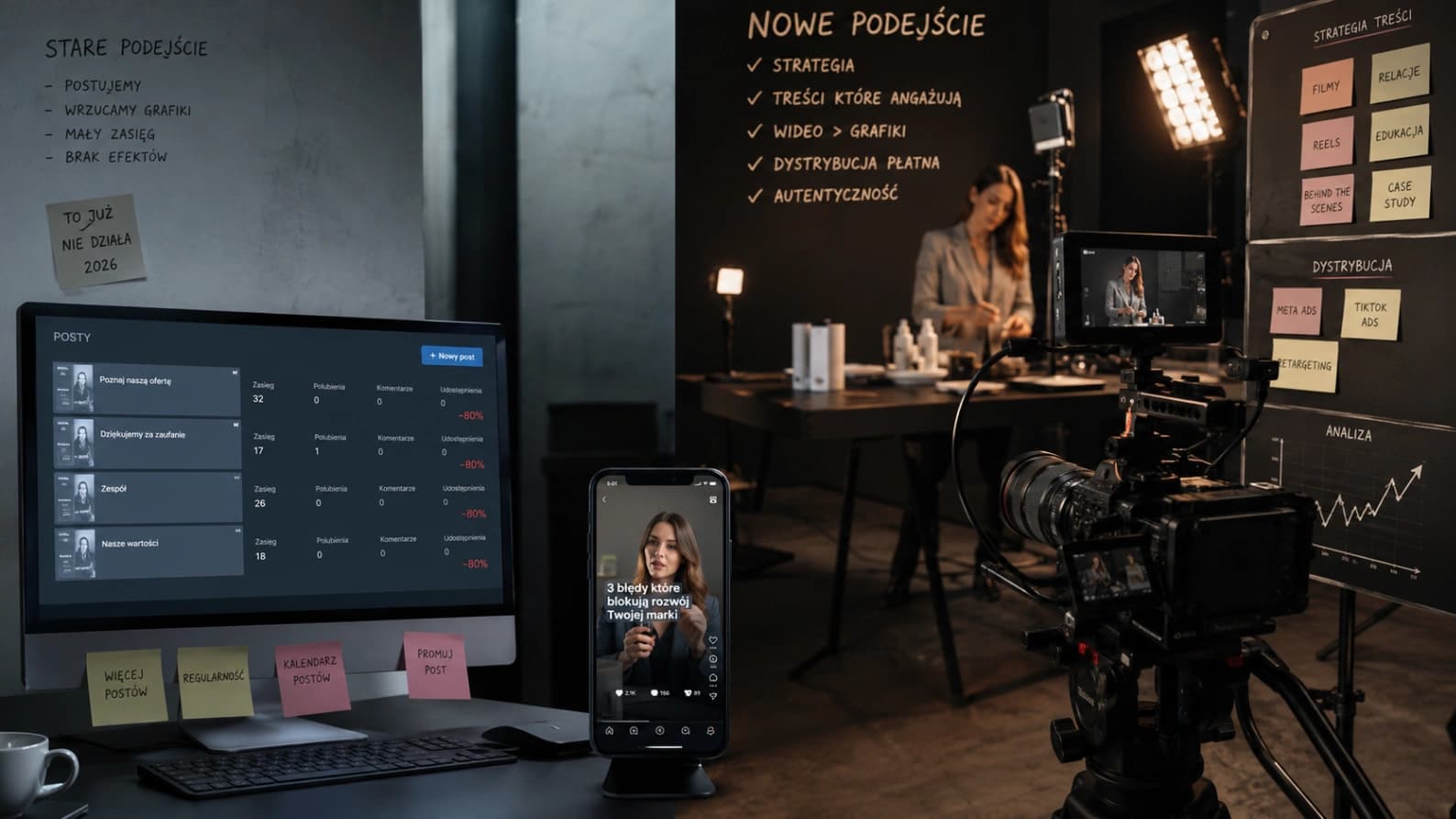
Old Approach vs. Growth Strategy
To avoid unreadability and information chaos, I have prepared a simple breakdown of the key differences between the old model and a modern approach focused on real business growth.
Frequency and publication format:
- Old approach: Publishing simple stock graphics every day just to "maintain activity" on the profile.
- Growth Strategy: Publishing less often, but with immense value. Emphasis on high-quality content production – dynamic videos, Reels, and authentic team photos.
Main business goal:
- Old approach: Collecting vanity metrics, such as likes and comments from friends.
- Growth Strategy: Building deep brand trust, customer education, and driving valuable traffic to your own website.
Synergy and distribution:
- Old approach: Relying entirely on free algorithms. The profile is managed in isolation from sales processes.
- Growth Strategy: Supporting the best content with an advertising budget. Full integration with analytics, UX/UI, and optimized web development, so that traffic translates into leads.
How to regain control over your online presence?
Understanding that mechanically publishing posts alone is no longer a working strategy is a key breakthrough moment for any business. From this point, you can start designing processes that tangibly work towards your profit. Here are practical steps worth implementing first:
- Shift from quantity to quality. Instead of ten weak posts a month, prepare three outstanding materials solving your customers' problems.
- Invest in the visual layer of your business. Show your services in real use, giving clients a sense of transparency.
- Allocate a fixed, monthly budget to promote key publications to a precisely targeted audience.
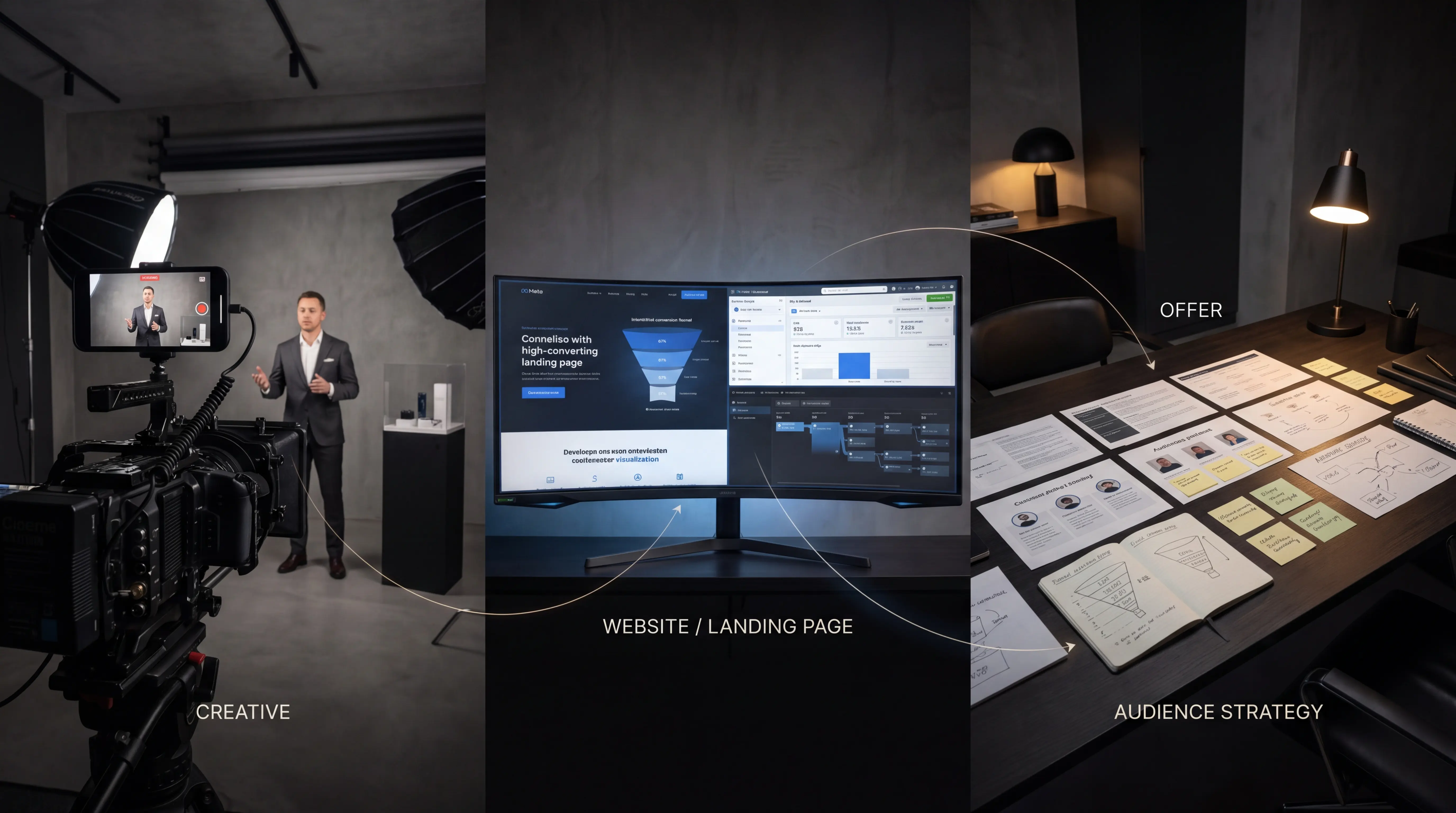
- Take care of your digital environment. Make sure the website you direct traffic to is not a barrier, but an intuitive guide facilitating contact with your company.
Checklist: Does your communication require a change?
Before you invest another month in standard post creation, answer the following questions honestly for yourself. If the majority of the answers are affirmative, it is a clear signal that your process requires a deeper revision:
- Do you publish content without clearly defining which stage of the customer's purchasing path it belongs to?
- Is your monthly budget for the paid distribution of posts zero PLN?
- Is the majority of your publications based on fake photos from free databases instead of authentic materials from the daily life of the company?
- Does the landing page in your profile bio load slowly and lack adaptation to modern mobile standards?