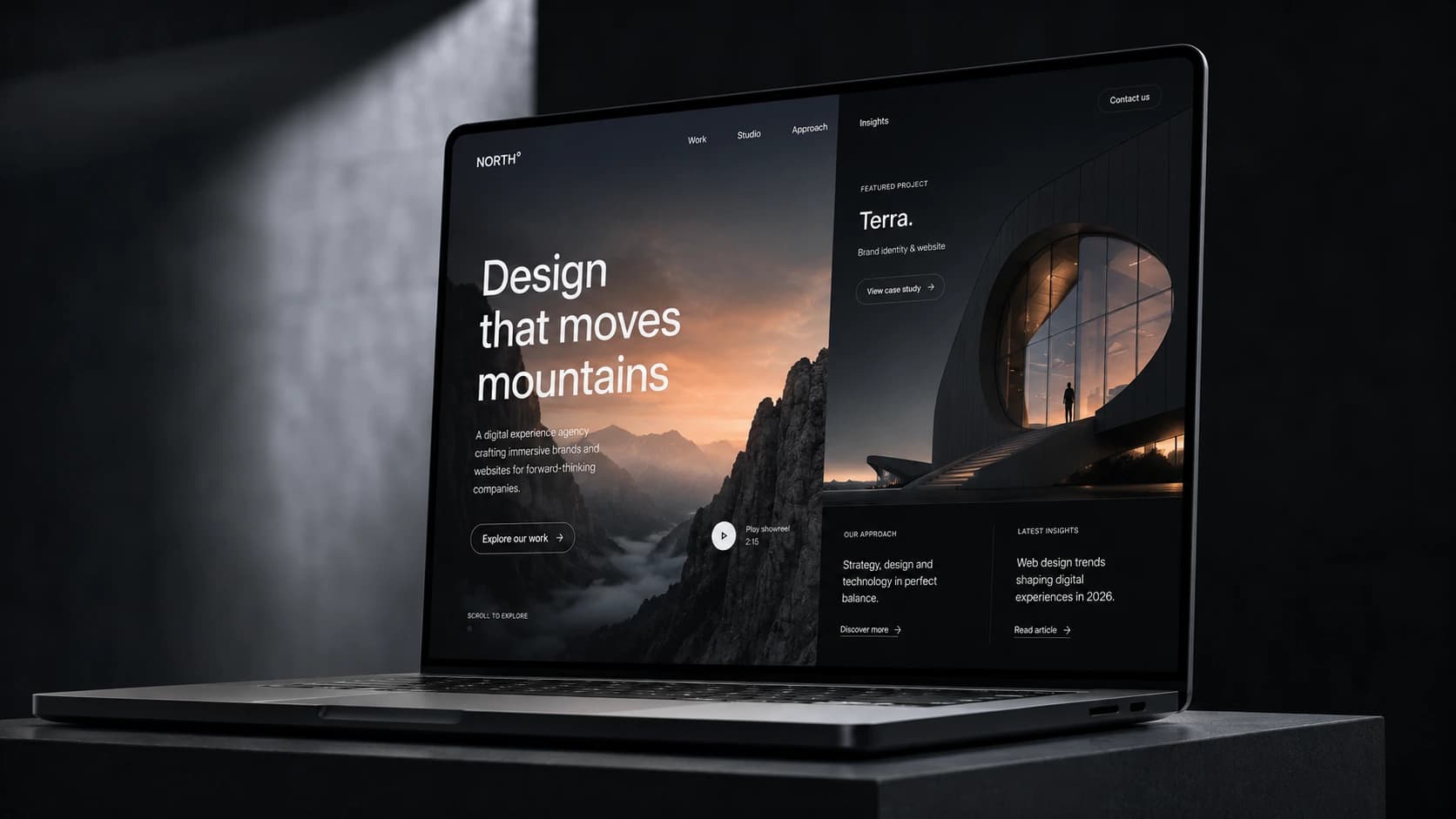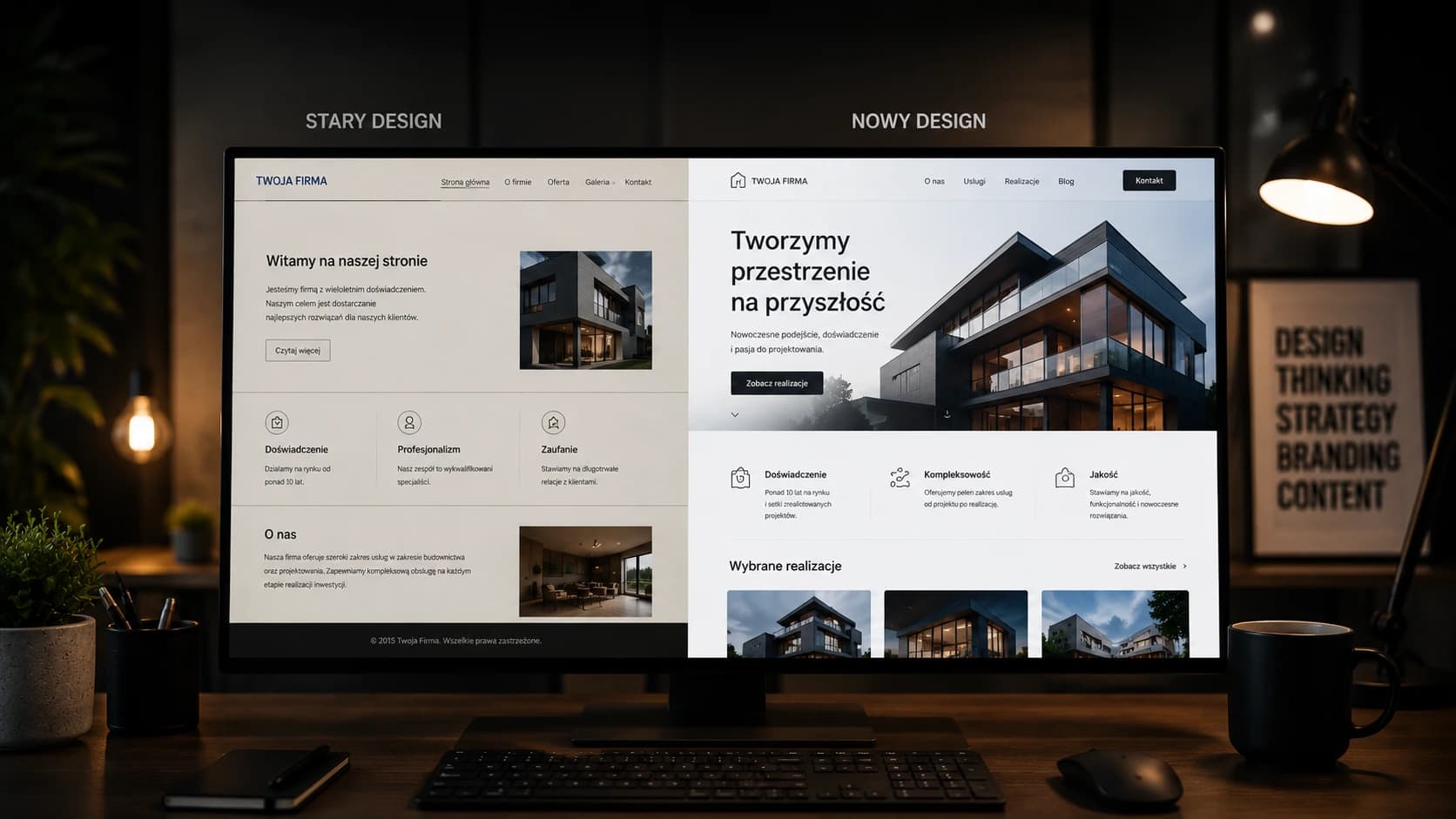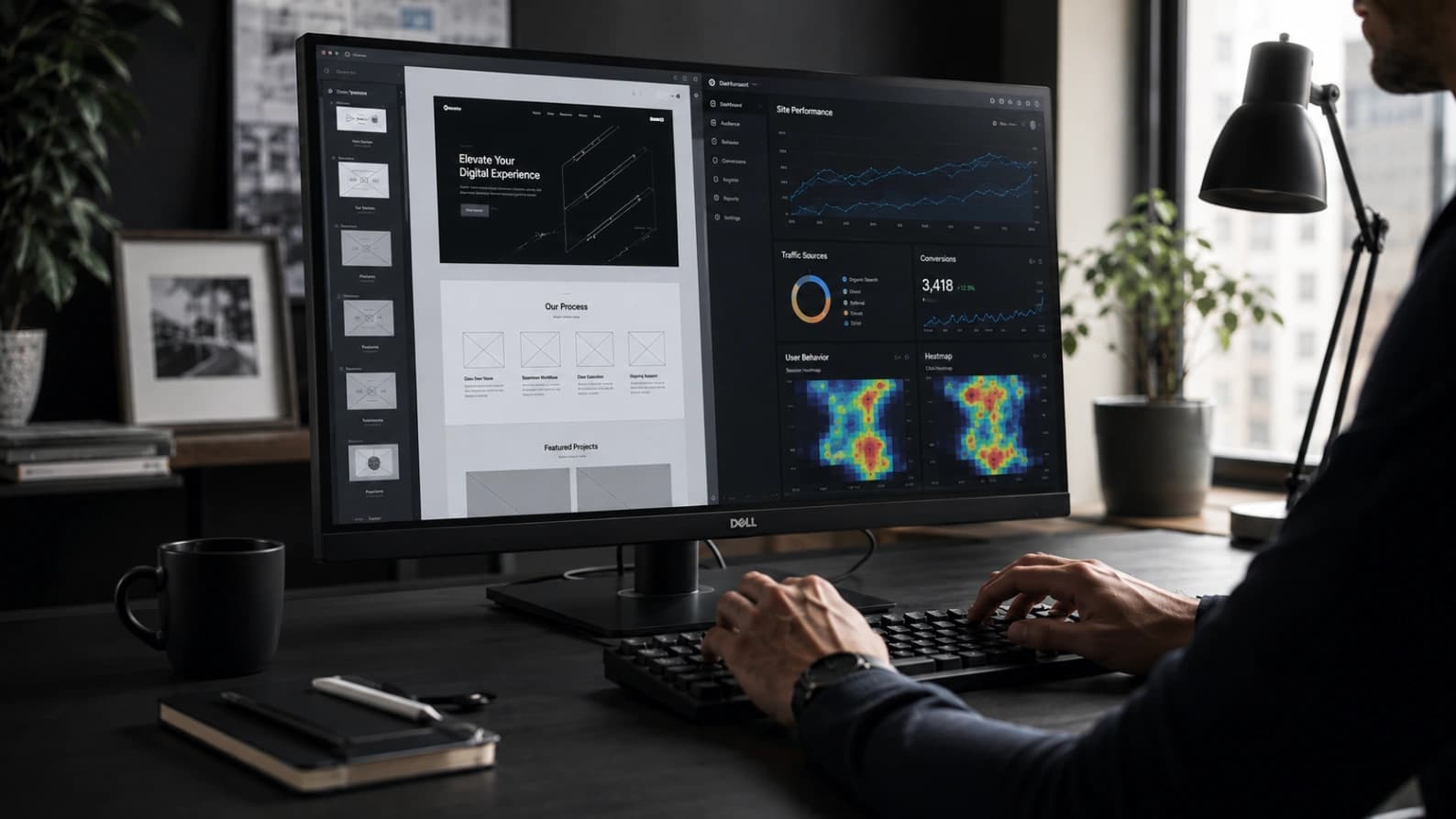
Often, I meet with founders who come to us frustrated. They show a website that cost tens of thousands of zlotys, wins industry awards for design, features brilliant animations, and a stunning color palette. There is only one problem: the phones are silent, and the inbox is empty. Budgets from Google Ads and Meta Ads burn away, generating traffic that leads to nothing.
From a business perspective, your website is your most important salesperson. If it looks like a million dollars but can't close a sale, it means it's not doing its job. At Innova Creative Agency, we don't evaluate projects solely through the lens of aesthetics. We look at them as growth partners—we search for bottlenecks that are blocking your profit.
Where does the problem usually lie when a beautiful website doesn't convert? Here are the 9 most common mistakes that kill sales under the guise of perfect design.
9 Mistakes That Kill Website Sales
1. Form Over Function (When UI Kills UX)
It happens that interactive agencies design websites for other agencies to impress the industry, entirely forgetting about the end-user. Overly complex animations, scroll-jacking (forcing non-standard page scrolling), disappearing menus, or avant-garde content layouts make the user feel lost. If a client has to guess how to scroll down the page or where to find the pricing, they will simply close the browser tab. Conversion loves predictability.
2. Communication Chaos in the First Second (Lack of a Clear UVP)
The user evaluates your company in a fraction of a second after the page loads (the so-called above the fold section). The most common mistake? A huge, beautiful headline proclaiming: "We are the leader of 21st-century innovation." It sounds proud but means absolutely nothing. A client entering the site wants to know three things:
- What do you do here?
- How will this solve my problem?
- What should I do next? If your headline is poetic but incomprehensible, you lose your audience right at the start.
3. Playing Hide and Seek with the Call to Action (CTA)
Designers love so-called ghost buttons—transparent, delicate buttons that blend perfectly into a minimalist background. Unfortunately, users simply don't see them. A call-to-action button (Buy, Schedule a meeting, Get a quote) must scream from the screen. It should stand out with a contrasting color and clearly communicate what will happen after clicking. Too many equal options on one screen also cause decision paralysis.
4. Beautiful Desktop, Painful Mobile Reality
Most mockups are designed and approved on large, high-resolution monitors. Meanwhile, in practice, 60–80% of traffic (even in B2B) comes from smartphones. A website that looks insane on a desktop often becomes unreadable on a phone screen. Fonts that are too small, overlapping elements, huge photos pushing the text down, buttons that are impossible to tap with a finger—all of this dramatically lowers the mobile conversion rate.
5. The "We, We, We" Syndrome in Copywriting
One of the most common reasons for a lack of inquiries is the language the company uses on the site. If, while reading the text, you mostly see phrases like: our company, our experience, we can, our awards—it means the site satisfies the founder's ego, not the customer's needs. The audience doesn't care about your history until they understand what they will gain from working with you. Focus on the language of benefits and address the customer's concerns.
6. Too High a Barrier to Entry (Friction in the Process)
Imagine a client is finally ready to reach out, clicks "Get a quote," and sees a form with 12 fields to fill out (including tax ID number and company founding date). Every extra field in the form and every additional step in the e-commerce cart is so-called "friction." Collect only the data that is absolutely necessary to start a conversation. You can ask for the rest later.
7. Lack of Credibility (A Digital Empty Shell)
A beautiful website without social proof is just a promise. Customers today are highly skeptical. If in the "About Us" section you show purchased, fake photos of American actors in suits instead of your real team from Poland, your credibility drops to zero. A lack of specific case studies with results, video testimonials, or Google reviews means the client sees a pretty picture but is afraid to risk their money.
8. A Website Heavy as Lead
Technical debt is sometimes hidden under a modern design. Uploading a massive 4K video to the background and adding heavy plugins makes the page load in 7 seconds. The statistics are ruthless: with every additional second of loading time, you lose a huge percentage of potential clients. From an SEO perspective, slow websites (poor Core Web Vitals scores) are also mercilessly pushed down in Google rankings.
9. Disconnect Between the Ad and the Landing Page
This is a common mistake in Meta Ads or Google Ads campaigns. You see a great ad promising a free SEO audit. You click and land on the agency's homepage, where you have to navigate yourself to find that audit. A lack of consistency between the promise of the click and the landing page causes an almost immediate bounce. The landing page must be a direct extension of the ad.
Aesthetics vs. Conversion – Where Lies the Difference?
At Innova Creative Agency, we believe that outstanding design is design that sells. It is worth realizing what the difference in approach actually is.
| “Design only” approach | Growth-driven approach |
|---|---|
| Main focus on avant-garde graphic layouts. | Architecture built around the customer journey. |
| Copy is just an addition to the images. | Copy and site structure dictate the layout of visual elements. |
| A lot of generic, stock photos. | Authentic photo/video materials showing the real business and its processes. |
| The metric of success is “I like it”. | The metric of success is cost per acquisition (CPA) and organic growth. |
| Complicated, hidden navigation (e.g. a hamburger menu on desktop). | Clear menu and a transparent information hierarchy that builds trust. |