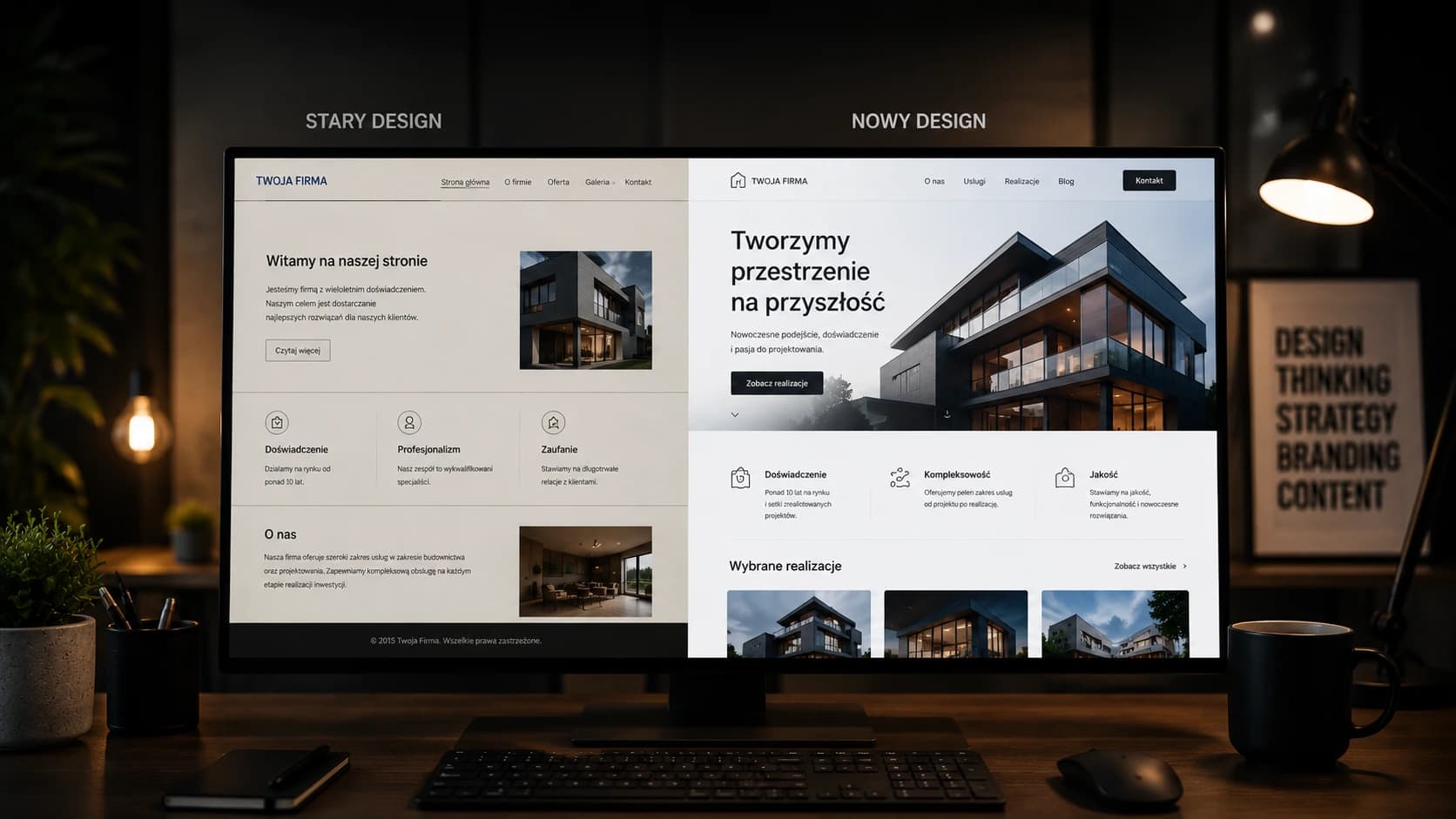
When I sit down to talk with founders and marketing directors, I very often hear a similar opening statement: "We just need to refresh the website. A new design, maybe a better layout of elements to make it look more modern. Let's leave what's underneath as it is, so it's cheaper and faster."
From a business perspective, this line of thinking seems logical. No one wants to invest in building a house from the foundation up if they think just painting the walls will suffice. The problem is that in the digital world, applying a nice, modern interface over old, crumbling code is a recipe for disaster. It is merely sugarcoating digital technical debt, which will sooner or later demand repayment—usually at the least opportune moment, for example, in the middle of a major sales campaign.
As growth partners supporting company development, at Innova Creative, we view a website not as a digital business card, but as the most critical conversion tool. How, then, do you recognize the moment when you should stop trying to salvage an old project and decide on a clean break?
5 Unmistakable Signs Your Company Needs a New Website
1. Your Marketing Department is Held Hostage by IT
A modern website must be agile. If adding a new landing page for a Google Ads campaign, changing the structure of services, or even swapping a banner on the homepage requires submitting tickets to the IT team or an external freelancer, you are losing time and money. Outdated or "custom-built" CMS systems written years ago are now one of the biggest bottlenecks in company growth. A new website is an opportunity to transition to modern ecosystems (e.g., headless CMS, Webflow, or a well-optimized, block-based WordPress) where marketing can operate independently.
2. Technical Debt is Devouring Your Budget
A website that has been repeatedly patched by various agencies and random developers is usually a ticking time bomb. Dozens of incompatible plugins, code that has been overwritten many times, and temporary solutions that everyone has forgotten about. Sometimes, the quoted cost of implementing a new, seemingly simple feature on an old system exceeds the cost of building that same module from scratch using new technology. If every modification takes weeks and breaks two other things on the site—it's time for a change.
3. Information Architecture Doesn't Match the Current Business
Businesses evolve. Perhaps you started as a local service company, and today you are a B2B player with premium products. The target audience, their problems, and their purchasing process have changed. If your current website's structure doesn't reflect who the company is today, simply applying a new graphic theme (redesign) will accomplish nothing. You need to redesign user journeys, navigation, and conversion funnels.
4. Technical Metrics (Core Web Vitals) are Blocking SEO
Google openly favors websites that load lightning-fast and are perfectly optimized for mobile devices. If your old platform relies on heavy, archaic code, and mobile users have to zoom in on the screen to click anything—you are losing invaluable organic traffic. A superficial redesign won't fix loading speeds. Modern architecture is required here.
5. You Are Burning Through Google and Meta Ads Budgets
This is the most painful sign. You invest thousands in well-configured advertising campaigns, generating valuable traffic, but users bounce immediately after entering the site. Poor usability, an unintuitive purchasing process, or a contact form that works "on and off" causes the Customer Acquisition Cost (CAC) to rise drastically. A new website allows you to build a conversion process based on current standards and user behavior data.
Redesign or Build from Scratch? [Decision Checklist]
Not every website needs to be bulldozed. We often advise clients to stick with their current solution if it makes business sense. How do you evaluate this?
Choose a redesign (UX/UI facelift) when:
- Your website is built on a modern, secure engine, and its code is clean.
- The marketing team can easily manage content and build new subpages.
- The problem only concerns conversions at specific steps (e.g., an unclear shopping cart, poorly visible CTAs).
- You are undergoing a rebranding (changing the logo, color scheme, typography), but the functional layout still perfectly achieves business goals.
Invest in a new website from scratch when:
- The site loads dramatically slowly, and SEO audits point to errors lying within the very skeleton of the code.
- The company's offer and target customer have changed so much that the current information architecture introduces chaos.
- You are using an outdated, un-updated CMS that threatens data security.
- You are locked in with a single provider using a proprietary system that no one else on the market wants to service.