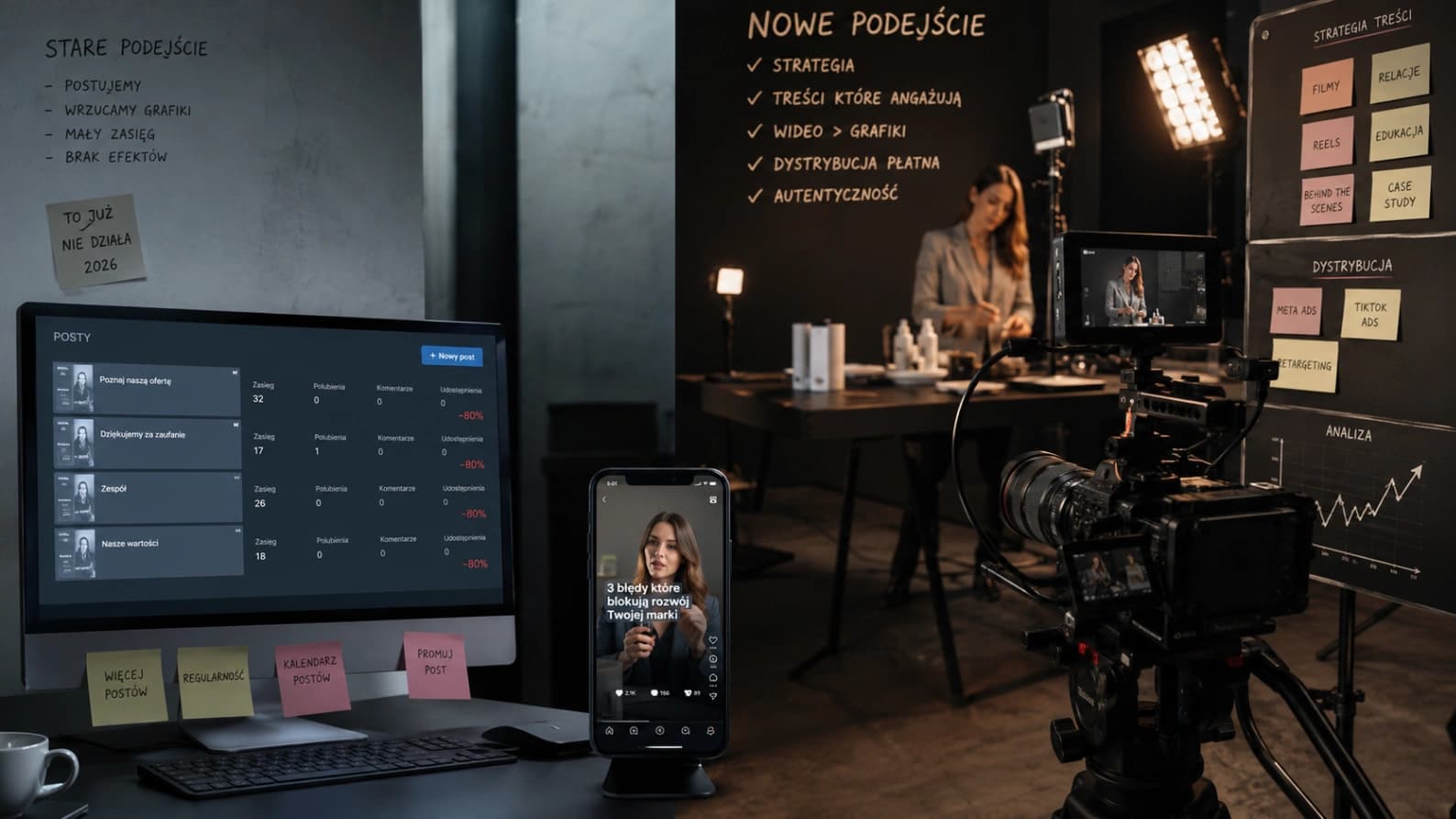
As a digital strategist, in almost every meeting with company founders in Poland, I encounter two extreme approaches. The first is: "We have to be everywhere, post anything, as long as it's every day." The second is hard skepticism: "We sell machinery for industry (or expensive B2B services), our clients aren't sitting on Instagram or TikTok, it's a waste of time." From a business point of view, both of these attitudes are a trap today.
Poland is a highly mature market for e-commerce and digital services. Consumers and business partners here are very demanding—they buy with their eyes, verify reviews, and do thorough research before making a decision. Social media is no longer just a place to watch funny videos. They have become search engines, social proof platforms, and a powerful tool supporting sales. The question is no longer "is it worth it?", but "how to do it without burning through your budget and time?".
Why Does Your Company Really Need Social Media? (Real Benefits)
If we put aside marketing jargon, well-managed social media communication solves specific business problems within a company.
1. Closing the Trust Gap (Social Proof)
Imagine launching a great Google Ads campaign. The user clicks, enters a beautiful website (which, by the way, we'd also be happy to design for you), and reads the offer. What do they do next? Before sending the contact form, they open a new tab and search for your company on LinkedIn, Facebook, or Instagram.
They check if you actually exist, if there are real people behind the logo, if you have comments, and how you react to them. An empty or abandoned profile is a warning sign: "Maybe this is a fly-by-night company?". Active social media close the sales process by building credibility.
2. Social Media Are the New Search Engines
This is a massive shift in recent years. Users (especially Gen Z and Millennials, who today already have significant purchasing power and hold decision-making positions) look for recommendations directly on TikTok, Instagram, or LinkedIn (for B2B). If you're not there or your profile doesn't answer their search intent, you are giving up the market without a fight.
3. Lowering Customer Acquisition Cost (CAC) in Meta Ads
Organic social media and paid advertising (Meta Ads) are an interconnected system. When you build recognition organically, you reach people who become familiar with your brand. When you later target them with a paid campaign, the Cost Per Click (CPC) and the cost of acquiring a lead usually drop drastically. People are more willing to click on ads from companies they have already "seen somewhere".
Why Don't Companies in Poland "Feel" the Effects of Social Media? [Main Mistakes]
I very often hear: "We ran it for half a year and got no inquiries out of it." When I look under the hood of such activities, I usually see the same set of mistakes:
- Lack of a distribution strategy: Creating a great post and leaving it to fend for itself. Organic algorithms cut reach. If you have an important business message, you must support it with at least a minimal advertising budget.
- Talking about yourself, not the client: The dominance of posts like "We received an award" or "Our company is 10 years old" over posts that actually solve the recipient's problems or educate them.
- Stock sterility: Using perfect, purchased photos of smiling people in suits. In 2026, authenticity is what counts. Even a smartphone photo taken in the office or on the production floor converts better than smoothed-out graphics from a stock photo bank.
- The "everywhere and nowhere" syndrome: Trying to be on Instagram, TikTok, LinkedIn, and Facebook all at once, while having the resources (time and budget) for just one of these platforms.
B2B vs. B2C: Where Should You Direct Your Efforts?
Choosing the right platform is foundational. You don't need to dance on TikTok if you sell production lines.
| Business Model | Best Channels | What Actually Works? |
|---|---|---|
| B2B (Services, Tech, Industry) |
LinkedIn, YouTube, (sometimes Twitter/X) | Founders' personal branding (Employee Advocacy), sharing know-how, implementation case studies, showing processes "from the kitchen". |
| B2C (E-commerce, Local B2C) |
Instagram, TikTok, Facebook | Dynamic video (Reels/TikTok), User Generated Content (customers using the product), quick replies to messages (DM). |
| Premium Services | Instagram, LinkedIn | Top-tier aesthetics, showing details, building exclusivity and unavailability. |
Checklist: Are You Ready to Run Social Media?
Before you decide to invest time or money, answer these questions honestly:
- 📌 Do I know who my ideal client is and on which platforms they spend their time?
- 📌 Do I have someone in the company who can provide materials (photos/videos/knowledge) to the agency or creator?
- 📌 Does my budget account not only for content creation but also for paid promotion (Meta Ads)?
- 📌 Do I understand that social media is a marathon, not a sprint, and I shouldn't expect dozens of leads in the first week?