
Back to blog
Marketing

Here is the professional English translation of the text, fully adapted for a blog post while strictly preserving the original structure.

Innova Creative Agency
22 May 2026
12 min read
Here is the professional English translation of the text, fully adapted for a blog post while strictly preserving the original structure.

Before You Hand Over Your Budget. 7 Questions to Ask an Agency Before Launching a Meta Ads Campaign

Short Answer

Choosing the right agency to run your Meta Ads campaigns is a decision about who you entrust with the responsibility for your business's growth. Before you sign a contract, you must know whether your future partner focuses on real profits (Customer Acquisition Cost, ROAS) or merely on vanity metrics (likes, reach). The key questions should revolve around who is responsible for creatives, how analytics will be handled, and whether the agency will audit your website for UX before directing paid traffic to it.

Dozens of offers from performance marketing agencies land on the desks of founders and marketing directors in Poland. Almost every single one promises "sales scaling," "cheap clicks," and "reaching the ideal target audience." However, from my practice as a strategist, most of these relationships end in frustration after just a few months.

Why? Because at the contract-signing stage, both parties are often talking about entirely different things. The client expects real profit in the company's cash register. The agency plans to deliver traffic and good stats in the ads manager.

When a problem arises—e.g., the campaign generates website visits, but no one buys—the blame game begins. The agency says: "Traffic is cheap, your offer or website isn't working." The client replies: "You are bringing us the wrong traffic."

To avoid this scenario, you need to stop treating the agency as a contractor whose only job is to just "click around and set up ads." You need a partner (a growth partner) who will look at your business holistically. Here are 7 questions you absolutely must ask at the meeting to check who you are dealing with.


1. What metrics (KPIs) will you report to us at the end of the month?

This is the most important test of the agency's business maturity. If the answer mainly revolves around reach, impressions, CPC (Cost Per Click), or CTR (Click-Through Rate)—know that you are talking to someone living in the past. These metrics are important for the specialist optimizing the campaign on a daily basis, but from your business's perspective, they don't matter much. You can't pay invoices with reach.

What should you expect? A strong partner will focus on business metrics:

  • CPA / CPL (Cost Per Action / Lead): How much does it cost us to acquire one real sales inquiry?

  • ROAS (Return on Ad Spend): How many dollars of revenue does every dollar spent on ads generate (in e-commerce)?

  • LTV / CAC: How does the customer acquisition cost relate to their lifetime value for your company?

2. Who creates the ad creatives and based on what?

In 2026, Meta's artificial intelligence (e.g., Advantage+ campaigns) has taken over most of the work related to manual targeting. In the past, a specialist spent hours cross-referencing interests. Today, the most important tool for reaching the customer is the creative—meaning video, graphics, and ad copy. It is what tells the algorithm who we are looking for.

If the agency only asks you: "Will you send us some photos of your products and a logo?", that's a bad sign. An agency that is supposed to truly scale your business must proactively manage content production. They should know what video formats (e.g., User Generated Content, Reels) work in your industry, propose scripts, test different communication angles, and regularly replace materials that have suffered from "ad fatigue."

3. What will you do before launching the first campaign to our website?

If the answer is: "We attach a card, make banners, and go"—run away. Paid traffic from Facebook or Instagram acts like a magnifying glass. If your website loads slowly, the purchasing process is complicated, and the contact form is discouraging on mobile devices, ads will only burn through your budget faster.

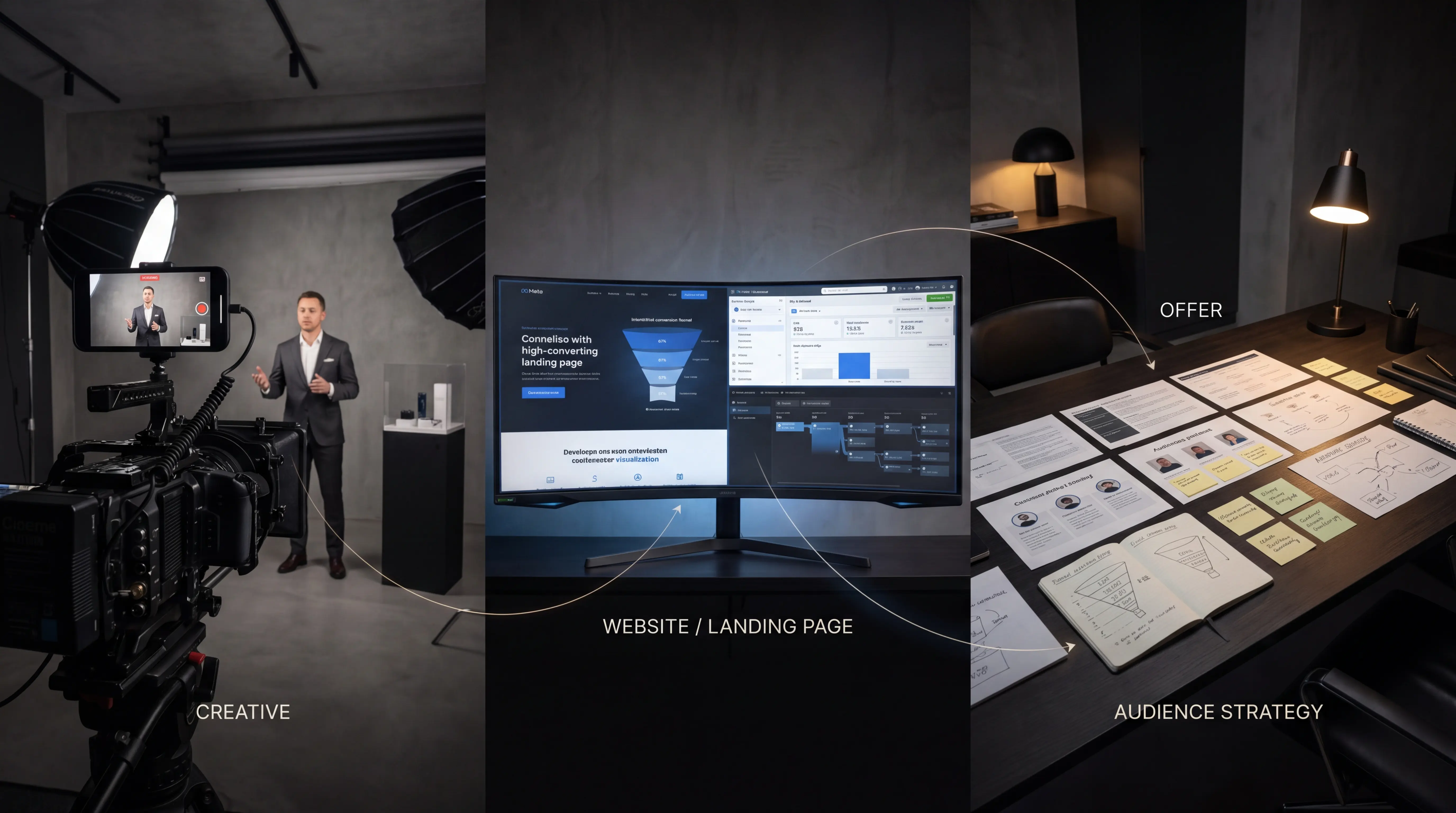
A professional agency will conduct at least a basic UX/UI audit before turning on the campaign. They will check the landing page, the conversion path, and the loading speed. At Innova Creative, we often suggest pausing the campaign for 2-3 weeks to first remove the barriers on the client's website. Without this, the campaign stands no chance of being profitable.

4. How will you technically handle the analytics issue?

This question exposes the agency's technological competence. Due to growing privacy restrictions and browsers blocking cookies, the "Facebook Pixel" alone is definitely not enough today. Meta's algorithms become "blind" if you rely only on old tracking methods. Pay attention to whether the agency mentions:

  • Conversions API (CAPI): Server-Side Tracking, which allows sending conversion data directly from your server to Meta, bypassing browser limitations.

  • Proper event configuration (Events) from the moment of adding to the cart to the actual purchase.

Without properly implemented analytics, the algorithm learns from incorrect or incomplete data, which drastically increases campaign costs.

5. Whose ad account will it be, and who owns the data collected on it?

This is a matter of elementary security for your company. Surprisingly often, I encounter situations where an agency launched a client's ads on their own agency account (the agency's Business Manager). The consequences? When the cooperation ends, the client is left with nothing. They lose all campaign history, optimized custom audiences (lookalike), and pixel data.

The golden rule: Campaigns must run on your company's ad account. You own the data and only grant the agency access as a partner. If someone proposes a different model under the pretext of "convenience," it is a red flag.

6. How do you test new solutions when results drop?

No campaign performs brilliantly forever. Sooner or later, costs start to rise, and conversions fall. A weak contractor will simply increase the budget or throw up their hands, saying that "the market has saturated."

Ask about their testing methodology. Do they use A/B tests in an isolated environment? Do they test one variable at a time (e.g., only the headline, or only the first 3 seconds of the video)? A growth-oriented agency always has a Plan B, C, and D up their sleeve—testing new formats, refreshing copywriting, and sometimes even suggesting a change to the offer itself if they see the market has stopped reacting to it.

7. How does our offer compare to the competition from the perspective of a Facebook/Instagram user?

This question checks their commitment to your business (strategic marketing). A simple ad "clicker" does not analyze your pricing or guarantees. They take what you give them.

A strong strategist will analyze what the competition is communicating. If your product is more expensive but of better quality, the agency should propose how to highlight this value in the ad to divert attention from the price. If your offer is simply uncompetitive, a good advisor will tell you this directly before you spend money promoting it.


Contractor vs. Growth Partner [Comparison Table]

When deciding to cooperate, it is worth being aware of two different approaches in the market:

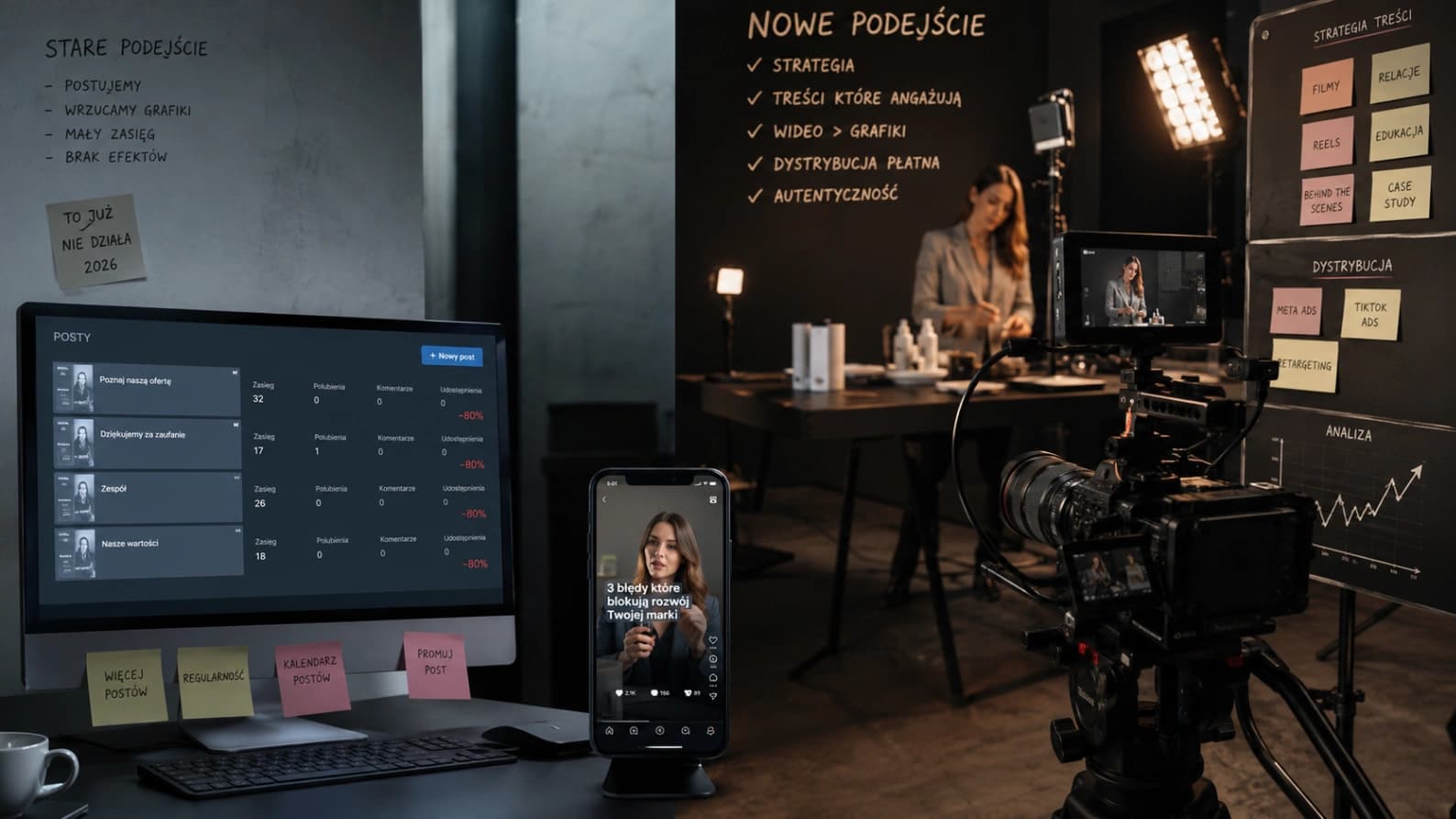
Approach FeaturesStandard Agency (Contractor)Growth Partner (e.g., Innova Creative)Main goalClicks and low costs in the dashboard.Business profitability (ROAS, lead generation).Approach to the website"We direct traffic where you tell us.""We audit UX/UI and optimize for conversion before the start."Graphic/video creativesThey expect ready materials from the client.They organize shoots, design videos, and test communication angles themselves.When results are lackingThey blame the client's website or the market.They propose changes to the offer, funnels, or landing pages.


Red Flags (A Short Checklist)

If you notice any of these points during a conversation with an agency, think twice:

  • They guarantee specific financial results before doing an audit and tests (no one can predict the exact reactions of a live market).

  • They don't ask about the margin of your products (without this, it's impossible to calculate when an ad actually makes money).

  • They hide which account the activities will be conducted on.

  • They offer a "set and forget" approach, without regular status updates and discussing business conclusions.

FAQ – Most Common Pre-Launch Concerns

1. What advertising budget is worth starting with for Meta Ads?

In practice, if your monthly budget for clicks alone (not including the agency fee) is lower than 2000-3000 PLN, the system will have too little data to learn and optimize effectively. In highly competitive e-commerce industries, the entry threshold is usually higher. It is worth setting a budget that allows for free testing.

2. Does Meta Ads make sense for B2B companies? My client is a CEO, not a teenager on Instagram.

Definitely yes. CEOs also scroll through Facebook in their free time or read articles on their phones (where the Audience Network is displayed). The key in B2B is not a funny video, but the right creative—e.g., showing a case study, a substantive downloadable report, or an invitation to a webinar. Paid traffic also perfectly closes actions from LinkedIn (retargeting).

3. How long does it take to evaluate if the campaign and agency are working well?

The first 2-4 weeks are usually the so-called algorithm learning phase and gathering hard data from the market. Although the first effects may appear after just a few days, a real assessment of the effectiveness and profitability of the activities is usually made after 2–3 months of full cooperation.

4. What if I have a bad website but I want to start selling now?

If the website turns customers away, investing in Meta Ads is burning money. In such situations, we suggest one of two solutions: building a dedicated, optimized Landing Page for a specific campaign (which is faster and cheaper than redesigning the entire site) or acquiring leads directly on Facebook (so-called Lead Ads campaigns) bypassing your own website.


Choosing the right agency is more than comparing rates on a proposal. It is about finding a team that will understand your business model just as well as they understand advertising algorithms. If you are looking for someone who will treat your budget as their own, and connect campaigns with great design and website usability—at Innova Creative Agency, we speak your language. Before we launch the first campaign, we will check if your digital ecosystem is truly ready to welcome new customers.Here is the professional English translation of the text, fully adapted for a blog post while strictly preserving the original structure.


Before You Hand Over Your Budget. 7 Questions to Ask an Agency Before Launching a Meta Ads Campaign

Short Answer

Choosing the right agency to run your Meta Ads campaigns is a decision about who you entrust with the responsibility for your business's growth. Before you sign a contract, you must know whether your future partner focuses on real profits (Customer Acquisition Cost, ROAS) or merely on vanity metrics (likes, reach). The key questions should revolve around who is responsible for creatives, how analytics will be handled, and whether the agency will audit your website for UX before directing paid traffic to it.

Dozens of offers from performance marketing agencies land on the desks of founders and marketing directors in Poland. Almost every single one promises "sales scaling," "cheap clicks," and "reaching the ideal target audience." However, from my practice as a strategist, most of these relationships end in frustration after just a few months.

Why? Because at the contract-signing stage, both parties are often talking about entirely different things. The client expects real profit in the company's cash register. The agency plans to deliver traffic and good stats in the ads manager.

When a problem arises—e.g., the campaign generates website visits, but no one buys—the blame game begins. The agency says: "Traffic is cheap, your offer or website isn't working." The client replies: "You are bringing us the wrong traffic."

To avoid this scenario, you need to stop treating the agency as a contractor whose only job is to just "click around and set up ads." You need a partner (a growth partner) who will look at your business holistically. Here are 7 questions you absolutely must ask at the meeting to check who you are dealing with.


1. What metrics (KPIs) will you report to us at the end of the month?

This is the most important test of the agency's business maturity. If the answer mainly revolves around reach, impressions, CPC (Cost Per Click), or CTR (Click-Through Rate)—know that you are talking to someone living in the past. These metrics are important for the specialist optimizing the campaign on a daily basis, but from your business's perspective, they don't matter much. You can't pay invoices with reach.

What should you expect? A strong partner will focus on business metrics:

  • CPA / CPL (Cost Per Action / Lead): How much does it cost us to acquire one real sales inquiry?

  • ROAS (Return on Ad Spend): How many dollars of revenue does every dollar spent on ads generate (in e-commerce)?

  • LTV / CAC: How does the customer acquisition cost relate to their lifetime value for your company?

2. Who creates the ad creatives and based on what?

In 2026, Meta's artificial intelligence (e.g., Advantage+ campaigns) has taken over most of the work related to manual targeting. In the past, a specialist spent hours cross-referencing interests. Today, the most important tool for reaching the customer is the creative—meaning video, graphics, and ad copy. It is what tells the algorithm who we are looking for.

If the agency only asks you: "Will you send us some photos of your products and a logo?", that's a bad sign. An agency that is supposed to truly scale your business must proactively manage content production. They should know what video formats (e.g., User Generated Content, Reels) work in your industry, propose scripts, test different communication angles, and regularly replace materials that have suffered from "ad fatigue."

3. What will you do before launching the first campaign to our website?

If the answer is: "We attach a card, make banners, and go"—run away. Paid traffic from Facebook or Instagram acts like a magnifying glass. If your website loads slowly, the purchasing process is complicated, and the contact form is discouraging on mobile devices, ads will only burn through your budget faster.

A professional agency will conduct at least a basic UX/UI audit before turning on the campaign. They will check the landing page, the conversion path, and the loading speed. At Innova Creative, we often suggest pausing the campaign for 2-3 weeks to first remove the barriers on the client's website. Without this, the campaign stands no chance of being profitable.

4. How will you technically handle the analytics issue?

This question exposes the agency's technological competence. Due to growing privacy restrictions and browsers blocking cookies, the "Facebook Pixel" alone is definitely not enough today. Meta's algorithms become "blind" if you rely only on old tracking methods. Pay attention to whether the agency mentions:

  • Conversions API (CAPI): Server-Side Tracking, which allows sending conversion data directly from your server to Meta, bypassing browser limitations.

  • Proper event configuration (Events) from the moment of adding to the cart to the actual purchase.

Without properly implemented analytics, the algorithm learns from incorrect or incomplete data, which drastically increases campaign costs.

5. Whose ad account will it be, and who owns the data collected on it?

This is a matter of elementary security for your company. Surprisingly often, I encounter situations where an agency launched a client's ads on their own agency account (the agency's Business Manager). The consequences? When the cooperation ends, the client is left with nothing. They lose all campaign history, optimized custom audiences (lookalike), and pixel data.

The golden rule: Campaigns must run on your company's ad account. You own the data and only grant the agency access as a partner. If someone proposes a different model under the pretext of "convenience," it is a red flag.

6. How do you test new solutions when results drop?

No campaign performs brilliantly forever. Sooner or later, costs start to rise, and conversions fall. A weak contractor will simply increase the budget or throw up their hands, saying that "the market has saturated."

Ask about their testing methodology. Do they use A/B tests in an isolated environment? Do they test one variable at a time (e.g., only the headline, or only the first 3 seconds of the video)? A growth-oriented agency always has a Plan B, C, and D up their sleeve—testing new formats, refreshing copywriting, and sometimes even suggesting a change to the offer itself if they see the market has stopped reacting to it.

7. How does our offer compare to the competition from the perspective of a Facebook/Instagram user?

This question checks their commitment to your business (strategic marketing). A simple ad "clicker" does not analyze your pricing or guarantees. They take what you give them.

A strong strategist will analyze what the competition is communicating. If your product is more expensive but of better quality, the agency should propose how to highlight this value in the ad to divert attention from the price. If your offer is simply uncompetitive, a good advisor will tell you this directly before you spend money promoting it.


Contractor vs. Growth Partner [Comparison Table]

When deciding to cooperate, it is worth being aware of two different approaches in the market:

Approach FeaturesStandard Agency (Contractor)Growth Partner (e.g., Innova Creative)Main goalClicks and low costs in the dashboard.Business profitability (ROAS, lead generation).Approach to the website"We direct traffic where you tell us.""We audit UX/UI and optimize for conversion before the start."Graphic/video creativesThey expect ready materials from the client.They organize shoots, design videos, and test communication angles themselves.When results are lackingThey blame the client's website or the market.They propose changes to the offer, funnels, or landing pages.


Red Flags (A Short Checklist)

If you notice any of these points during a conversation with an agency, think twice:

  • They guarantee specific financial results before doing an audit and tests (no one can predict the exact reactions of a live market).

  • They don't ask about the margin of your products (without this, it's impossible to calculate when an ad actually makes money).

  • They hide which account the activities will be conducted on.

  • They offer a "set and forget" approach, without regular status updates and discussing business conclusions.


FAQ – Most Common Pre-Launch Concerns

1. What advertising budget is worth starting with for Meta Ads?

In practice, if your monthly budget for clicks alone (not including the agency fee) is lower than 2000-3000 PLN, the system will have too little data to learn and optimize effectively. In highly competitive e-commerce industries, the entry threshold is usually higher. It is worth setting a budget that allows for free testing.

2. Does Meta Ads make sense for B2B companies? My client is a CEO, not a teenager on Instagram.

Definitely yes. CEOs also scroll through Facebook in their free time or read articles on their phones (where the Audience Network is displayed). The key in B2B is not a funny video, but the right creative—e.g., showing a case study, a substantive downloadable report, or an invitation to a webinar. Paid traffic also perfectly closes actions from LinkedIn (retargeting).

3. How long does it take to evaluate if the campaign and agency are working well?

The first 2-4 weeks are usually the so-called algorithm learning phase and gathering hard data from the market. Although the first effects may appear after just a few days, a real assessment of the effectiveness and profitability of the activities is usually made after 2–3 months of full cooperation.

4. What if I have a bad website but I want to start selling now?

If the website turns customers away, investing in Meta Ads is burning money. In such situations, we suggest one of two solutions: building a dedicated, optimized Landing Page for a specific campaign (which is faster and cheaper than redesigning the entire site) or acquiring leads directly on Facebook (so-called Lead Ads campaigns) bypassing your own website.


Choosing the right agency is more than comparing rates on a proposal. It is about finding a team that will understand your business model just as well as they understand advertising algorithms. If you are looking for someone who will treat your budget as their own, and connect campaigns with great design and website usability—at Innova Creative Agency, we speak your language. Before we launch the first campaign, we will check if your digital ecosystem is truly ready to welcome new customers.